

Apollo Changed the World. Artemis III Could Define Space Exploration's Next Era, Says Space Historian, Amy Shira Teitel

Amy Shira Teitel

LOS ANGELES, CA, UNITED STATES, July 6, 2026 /EINPresswire.com/ -- More than half a century after Apollo 17 ended humanity's first chapter on the Moon, Artemis aims to begin a very different one. But according to space historian and author Amy Shira Teitel, the mission should not be judged by Apollo's standards or its sense of urgency.
NASA's original race to the Moon was shaped by very different circumstances than those driving Artemis, Teitel explains. During the Cold War, space exploration was a geopolitical contest between the United States and the Soviet Union. Artemis, by contrast, is part of a broader effort to establish a long-term human presence beyond Earth, paving the way for sustained lunar operations, commercial activity in cislunar space, and eventually missions to Mars.
"From an historical perspective, I don't see the need to go with the urgency we're seeing," says Teitel. "In the 1960s, space was a Cold War battleground with the Soviet Union. We aren't in the same situation now, even though the narrative is we're in a race with China."
Apollo 17 left the Moon in December 1972, ending a program driven by Cold War urgency and President John F. Kennedy's goal of landing a man on the Moon before the end of the decade. While that effort transformed science, engineering, and geopolitics, Teitel argues that Artemis III should not be viewed as Apollo's sequel, but as a mission guided by scientific goals, technological readiness, and long-term exploration.
"I think the Apollo program sort of ruined spaceflight in that it gave us really unrealistic expectations of how long something like landing on the Moon should take," says Teitel. "These goals are hard. They should take time and come with long-term planning and a methodical approach."
Although many policymakers have framed Artemis as a response to China's growing lunar ambitions, Teitel believes the comparison oversimplifies a far more complex reality. NASA's original target of returning astronauts to the Moon by 2024 has repeatedly shifted as engineers and mission planners have worked through technical and operational challenges.
The Artemis program also represents a dramatic departure from Apollo in both funding and leadership. While the Moon landings of the 1960s were largely government-driven efforts, NASA's return to the Moon depends heavily on commercial partnerships and private industry.
For Teitel, that shift raises important questions about who ultimately shapes the future of space exploration.
"It feels like space exploration isn't a national undertaking; it's a private undertaking," she says. "NASA represents our collective feeling that investing in and exploring space is important and worth the money. It feels more like space is a playground for people who want to go."
The upcoming Artemis III mission is set to test two different landers for Artemis IV's return to the Moon, though the status of those landers remains in flux. Whether the mission is remembered as the beginning of humanity's permanent return to deep space or simply another chapter in lunar exploration remains to be seen. What is certain, Teitel says, is that unlike Apollo, its legacy may not be defined by how quickly humanity reaches the Moon, but by whether it learns how to stay.
About Amy Shira Teitel
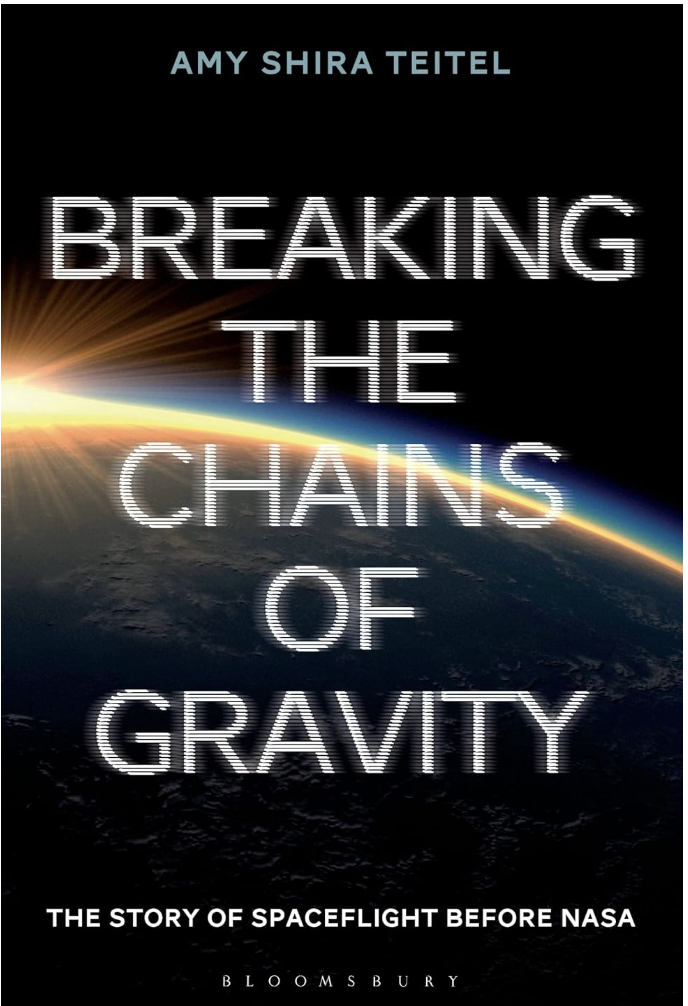
Amy Shira Teitel is a space historian, author, and science communicator specializing in the history of human spaceflight and Cold War-era technology. She holds degrees in the history of science and technology and science and technology studies and is the author of several acclaimed books, including Breaking the Chains of Gravity: The Story of Spaceflight before NASA, Apollo Pilot, and Fighting for Space. A former creator and host of The Vintage Space, Teitel has appeared as an expert commentator on numerous television programs and has written for publications including TIME, BBC Science Focus, Popular Science, and Scientific American. She is widely recognized for making the history of space exploration accessible to modern audiences through her writing, broadcasting, and public speaking.
Amy Shira Teitel is available for interviews.
Click here to learn more: https://www.amyshirateitel.com/home.html
Amanda Kent
Boundless Media USA
+1 313-403-5636
email us here
Legal Disclaimer:
EIN Presswire provides this news content "as is" without warranty of any kind. We do not accept any responsibility or liability for the accuracy, content, images, videos, licenses, completeness, legality, or reliability of the information contained in this article. If you have any complaints or copyright issues related to this article, kindly contact the author above.
